VISUAL MEDIA: STORYTELLING THROUGH NARRATIVE LIFE EXPERIENCES
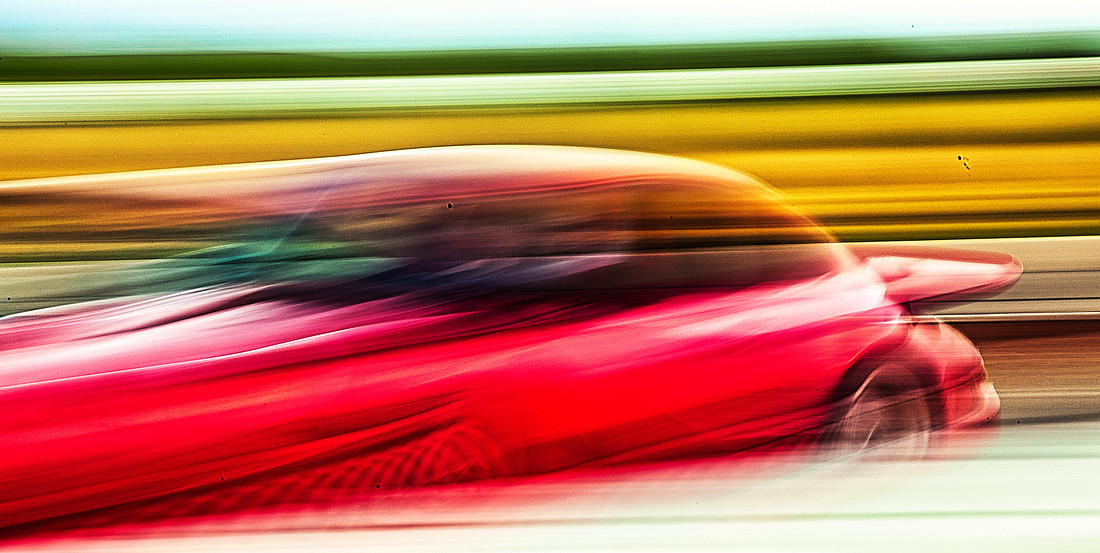 Shot a very slow shutter speed, typically 1/6 to 1/140 of a second edited from a RAW file (20-40MB) with vibrant colors being contrasted in post-production.
This editing technique typically takes 20-60 minutes of content creation. IMR CHALLENGE SERIES INDE MOTORSPORTS RANCH WILLCOX, ARIZONA

BLURRED PANNING PERSPECTIVE
The shot you see above is a Porsche 944 speeding between 70 to 90+ MPH at the Inde Motorsports Ranch in Willcox, AZ in June of 2020.
How did I achieve this amazing visually intense... yet rich, colorful feat?
The quick answer is, I simply pressed a button at the right time, sort of.
My response will ask you for a few minutes of your time to educate you on the process of what it mainly takes to plan, shoot, and edit a creative picture into what you saw when you first clicked on the dropdown menu above.
Grab a coffee.
I'm not going to bore you with the technicals of my camera settings, but this was shot at 1/5th of a second, f32, with a polarizing filter to contrast the image as much as I could without blowing out the colors.
1/5 of a second can go to a full second or longer, up to 1/140 for different effects for less blur or sharpness of the shot with the right panning and luck.
F32 was the amount of light I was attempting to NOT let in the camera, however with slow shutter speed, you let a LOT of light into the lens.
I have to note if this were a normal shot, I'd be shooting at 1/1200 to 1/8000 of a second to freeze the image with the movement of wheels to a point.
Yes, it's challenging to shoot Motorsports.
The Hoya HD3 polarizer filter is designed to darken skies, manage reflections, or suppress glare from water to typically make the image sharper, brings out contrast and colors for a more vibrant picture in very bight condition which I was shooting in at 4,500 feet elevation on a bight HOT sunny Southern Arizona day.
This worked to a point, but with an RF 24-105mm f4 Canon mirrorless lens, it was still not dark enough to achieve the effect I wanted, leading to a very blown out picture.
INSERT PICTURE OF ORIGINAL
My next step would have been to put an ND filter (neutral density) to darken up the shot, even more, not losing clarity or sharpness, which I will be buying in the future with variable levels of darkness.
This is not a filter I typically keep in my bag; polarized yes, just in case.
With the brief description of my camera settings on a Canon EOS R, a mirrorless camera, we can move on to what it actually TAKES to achieve this shot.
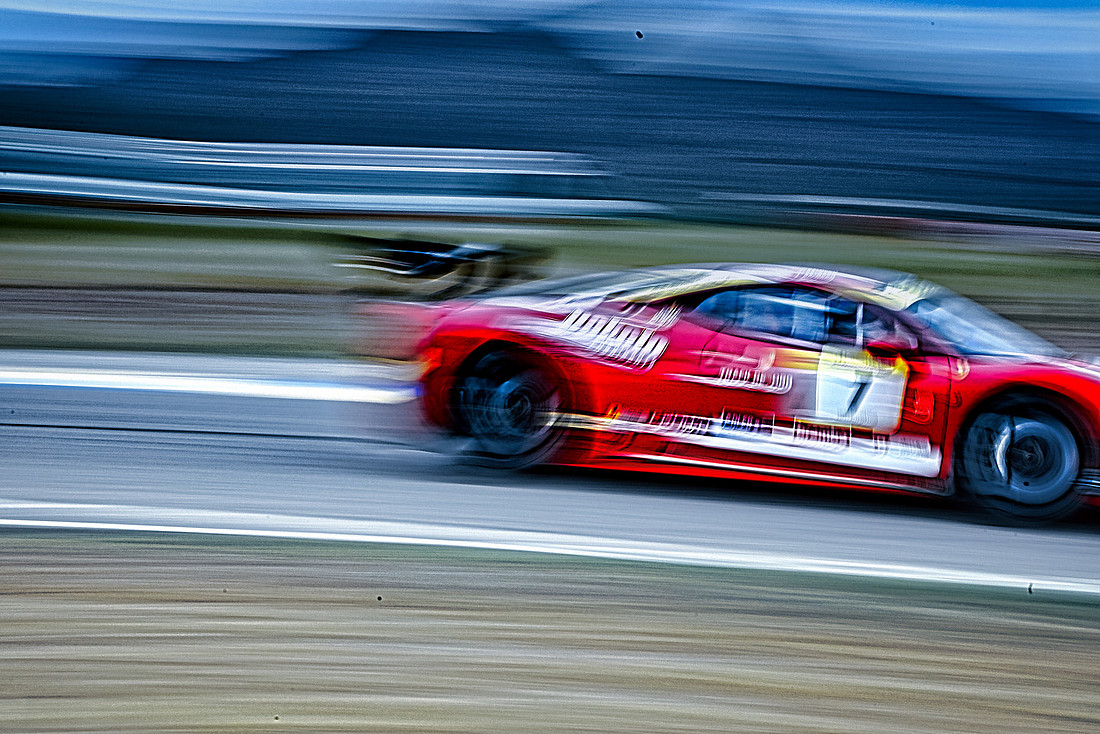 Shot at 1/40 of a second while panning to my right, this Italian speed machine is in essence of flight.IMR CHALLENGE SERIES INDE MOTORSPORTS RANCH
WILLCOX, ARIZONA
Shot a very slow shutter speed, typically 1/5 to 1/140 of a second edited from a RAW file (20-40MB) with vibrant colors being contrasted in post-production.
When using a RAW file format vs JPEG you're taking all the unprocessed data from the image (30 to 45 megabytes, JPEG is 3-6 megabytes) use to your advantage to edit all the colors, more importantly in my case with the blown-out images from slow shutter speed, I can manipulate the colors, shadows, contrast, sharpness, and all the DATA that I can CREATE a great image that you see before your very eyes.
I'm working with 10-20+ TIMES the amount of data you would have from your smartphone JPEG picture.
This editing technique typically takes 20-60+ minutes of content creation.
You're literally creating a picture from almost a typically unusable shot to a point.
What is Blurred Panning Perspective?
This is a concept I created from 3 words: Blur, Pan & Motion
For a formal explanation from Photographylife.com:
What is Motion Blur?
To understand how panning works to create a sense of motion in a stills photograph, we must first understand the motion blur.
When we create an image, the resulting photograph is a combination of all the objects in the scene – as well as their movement through the camera’s viewpoint – over the period of the exposure. During the exposure, if any object in the frame moves faster than the set shutter speed can “freeze,” the subject will look smeared along the direction of its relative motion.
What is Blurred?
“Motion blur” refers to the apparent streaking of moving objects in a photograph that occurs when part of the image being recorded changes during the exposure.
What is Panning?
“Panning” refers to a technique where you follow a subject with the camera while keeping it in the same position in the viewfinder as it moves along a plane of motion.
* If you would like a detailed and textbook definition, please see a detailed version below in the footnotes. Being a former graduate student, I still hold myself to citing sources.
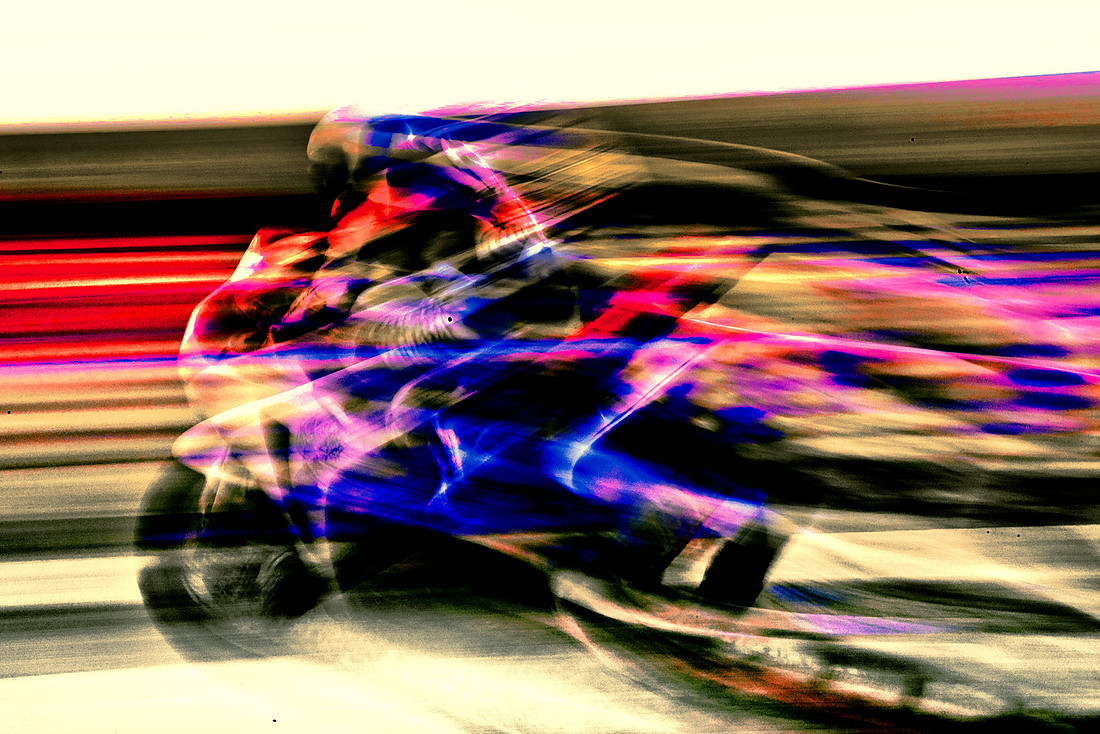 A motorcycle shot at 1/5 of a second, where movement is the essence of Motorsports.
IMR RIDERS SERIES INDE MOTORSPORTS RANCH WILLCOX, ARIZONA
(INSERT MORE COPY DESCRIPTION HERE)
I’ve Produced thousands of Events across the country in Experiential & Event Marketing for Fortune 500 Brands allowing me to give Guests & Clients like yourself the ultimate experience of Guest Service with my Corporate Training on the Walt Disney World College Program 4 month internship.
I bring what I call the “Disney Touch” to every Event I Produce and shoot across the country.
My role is to provide your Clients & Guests the ultimate Visual Media XPERIENCE for your content creation.
Thank you for your time & enjoy the "Reflection Of Moments" of what I call VISUAL MEDIA: STORYTELLING THROUGH NARRATIVE LIFE EXPERIENCES
"Never recreate places from your memories. Always imagine new places."
~COBB~ Inception The Movie
Enjoy the rest of your day!
Cheers,
s.
BLURRED PANNING PERSPECTIVE PACKAGE LINK
From Photographylife.com:
Guide to Motion Blur and Panning in Photography
In photography, conveying motion is one of the most challenging tasks due to the very nature of a stills photograph. You are essentially freezing a specific moment in time rather than capturing the whole of the sequence from which this moment originates. When set to fast shutter speeds, our cameras can break down whole events into precise frames that tell a story in hundredths and thousands of a second. Nowhere are fast shutter speeds more common than in the fields of sport and wildlife photography, where using a quick shutter speed is almost a prerequisite in the hopes of freezing the subject at the perfect moment when the action peaks.
The issue with telling a story in hundredths and thousands of a second is that, at such fast shutter speeds, the subject is perfectly frozen in place – so the image loses all sense of movement. To counter this, a photographer can employ two techniques known as motion blur and panning with motion blur.
“Motion blur” refers to the apparent streaking of moving objects in a photograph that occurs when part of the image being recorded changes during the exposure. This streaking may occur on an object that is moving within in the frame or because of user-induced camera shake. The longer the shutter speed, the more apparent the motion blur.
“Panning” refers to a technique where you follow a subject with the camera while keeping it in the same position in the viewfinder as it moves along a plane of motion. The subject can be anything from a runner on a racetrack to a flying bird, and this technique is most effective when your subject is moving across a horizontal plane. Panning with motion blur is a combination of the two techniques, where the photographer pans along with the subject while utilizing a slow shutter speed. This effectively combines both techniques to produce an image where part of the subject is sharp while the rest of the image blurred and streaked, thus creating the visual sensation of movement. Today’s article covers these two techniques and explains how they can be used to create more dynamic images.
What Is Motion Blur?
To understand how panning works to create a sense of motion in a stills photograph, we must first understand the motion blur.
When we create an image, the resulting photograph is a combination of all the objects in the scene – as well as their movement through the camera’s viewpoint – over the period of the exposure. During the exposure, if any object in the frame moves faster than the set shutter speed can “freeze,” the subject will look smeared along the direction of its relative motion.
This smearing occurs on an object that moves within the frame, or on a static subject when the camera moves during the exposure. The latter of these options is a useful technique in and of itself for creating a sense of motion in an otherwise motionless scene.
With the camera completely still (on a tripod or bean bag), motion blur can be used to create a juxtaposition between the moving and unmoving elements of a scene. While the shutter is open, the subjects that remain fixed for the duration of your exposure remain sharp and in focus while the elements of the scene that moved during the exposure are increasingly blurred depending on how fast they move.
The problem with this technique is that if your exposure time is too long, and the background behind your subject is too bright, you might end up “losing” your subject. Quite simply, the brightness of the background is stronger than that of your subject during the duration of the exposure. Therefore, this technique works better when you have a darker background from which your subject can stand out, like in the below image of Castle Geys
What is Panning?
Panning refers to a technique where you follow a subject with the camera while keeping it in the same position in the viewfinder as it moves along a plane of motion.
First, keep in mind that panning applies both to photos with motion blur and photos without. We pan with our subjects all the time in order to track it across the frame, often with fast shutter speeds to freeze motion completely. The beauty of panning is that the final image is highly dependent on the shutter speed set by the user, with slower shutter speeds giving the motion blur effect so often associated with the technique.